REDLEAF GROUP
NEWS
Read the latest news and info from Redleaf Group.

We are excited to announce the launch of redleafgroupheritage.au , showcasing our expanded Heritage Team and our full range of Cultural Heritage, Built Heritage, Native Title, and Training services. On the new site you’ll find: Heritage service overview Profiles of our heritage specialists Project examples and tailored solutions Cultural awareness and heritage training opportunities We welcome your feedback and invite you to explore the new site. Contact: heritage@redleafgroup.au

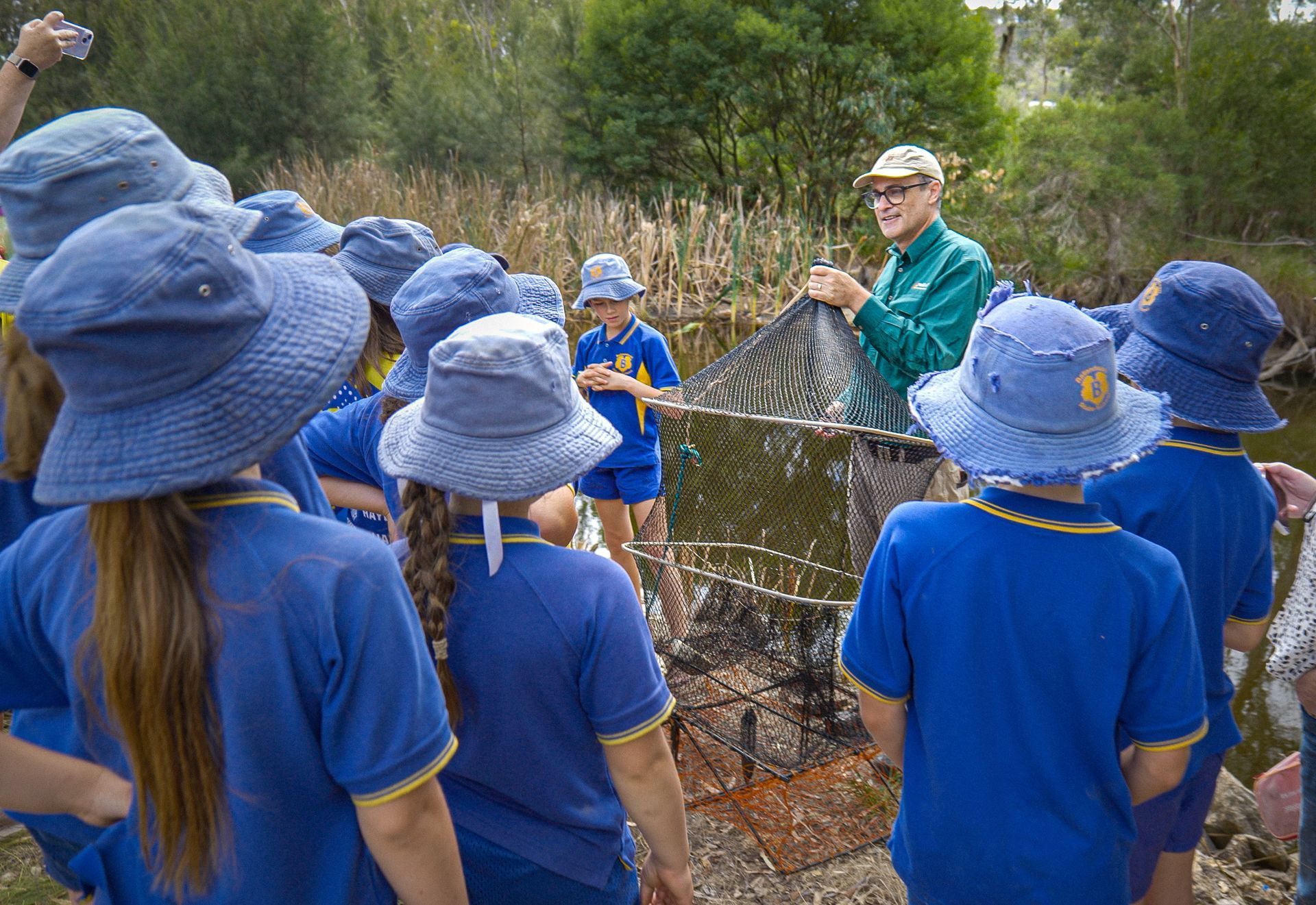
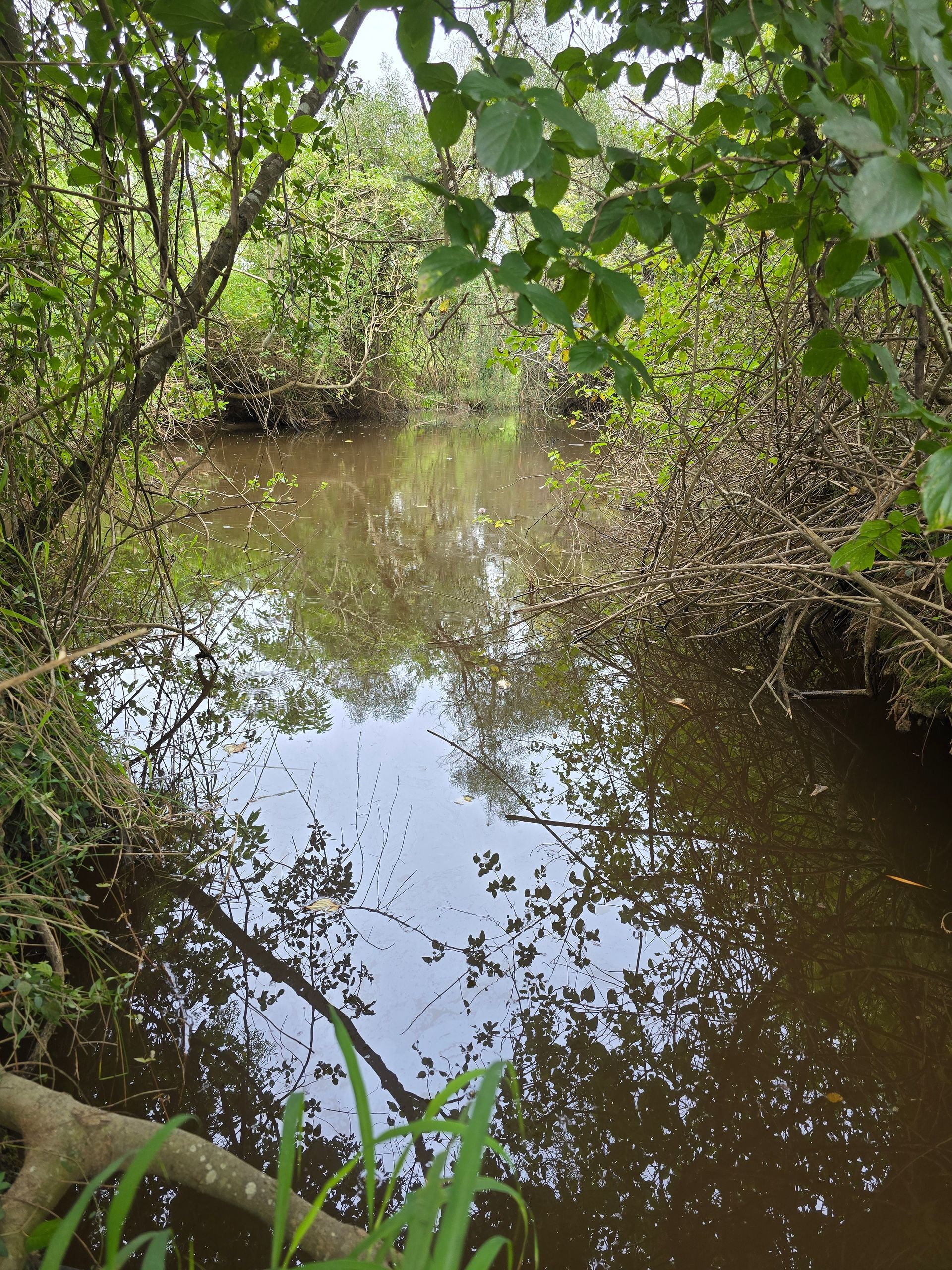
Through the year our teams undertake training in various areas. Earlier in the year, the ecology team at Redleaf Group spent a day in the field understanding the importance of riparian revegetation and learning about the methods used to support its regeneration. Riparian vegetation refers to the plant life that grows along the banks of rivers, streams, creeks, and other flowing bodies of water. These plants play a vital role in stabilising soil along waterways, helping to reduce erosion and sedimentation. In turn, this supports the health of our ecosystems by maintaining water quality for the plants and animals that depend on these habitats. They visited sites with varying levels of success, which helped them to better understand factors to consider when embarking on revegetation projects. Some factors include suitability of species to be planted, soil types, topography and the existing vegetation. The team are keen to revisit the sites in the coming months and years to see the progress of the little seedlings.

The Natural Grasslands on Alluvial Plains in the Darling Downs are a critically endangered ecological community? Once covering vast areas, these grasslands are now severely fragmented due to a range of factors including agriculture and urban development. These grasslands are vital for the maintenance of our unique biodiversity. They provide habitat for native species, support soil health, and even maintain water quality in the region. However, with their continued decline, many of these essential functions are at risk. By protecting and restoring these natural grasslands, we help conserve species, improve ecosystem resilience, and ensure a sustainable future for the Darling Downs. Let’s raise awareness for the importance of such ecosystems and help to preserve the invaluable ecological communities around us.

Lachlan Harriman Environmental Scientist & Ecologist Lachlan Harriman is an experienced Environmental Scientist and Ecologist passionate about restoring natural ecosystems and protecting threatened species. With extensive field experience across Queensland, Lachlan has contributed to a wide range of ecological surveys—including flora and fauna assessments, habitat condition evaluations, waterway barrier assessments, and targeted threatened species surveys. His work includes post-fire and post-flood rehabilitation, bushfire management, aquatic flora surveys, and the installation of nest boxes for vulnerable bird species. Lachlan also brings strong spatial analysis capabilities, enhancing Redleaf’s project planning and ecological modelling services. Q&A with Lachlan What inspired you to join Redleaf? “I joined after university because Redleaf offered diverse projects and meaningful work. Three years in, I’ve been fortunate to work on incredible projects—from snorkelling with platypus to conducting thousands of hectares of flora surveys.” A project you’re proud of? “Confirming the presence of State and National environmental matters in a tributary of the Brisbane River. My surveys helped guide the client to an environmentally responsible and compliant project outcome.” Favourite ‘wait… really?’ ecology fact? “Many Australian birds and marsupials depend on tree hollows that take hundreds of years to form. Old-growth trees underpin entire ecosystems.” What keeps you energised outside work? “Hiking and wildlife photography across the national parks of South East Queensland.”

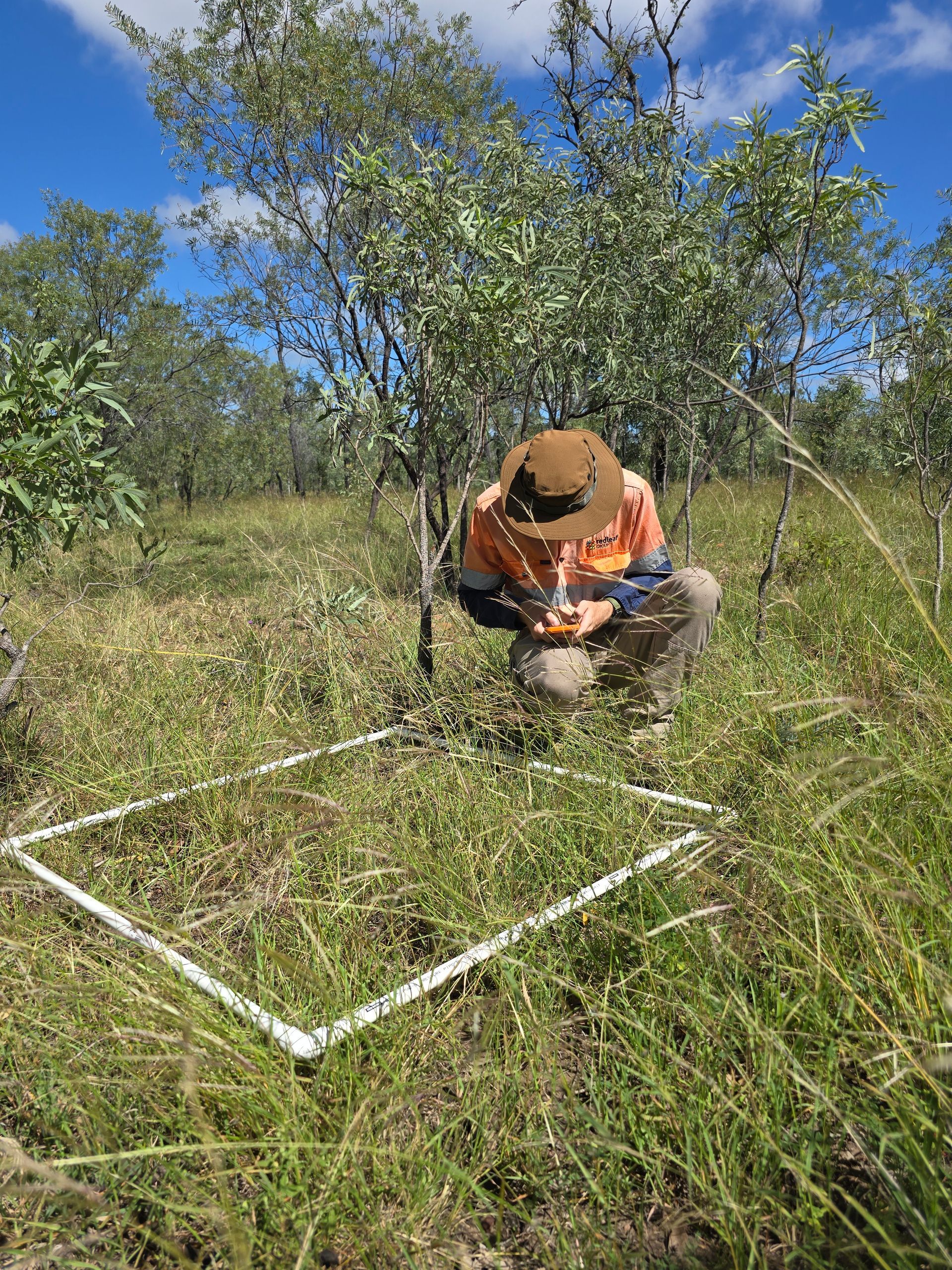
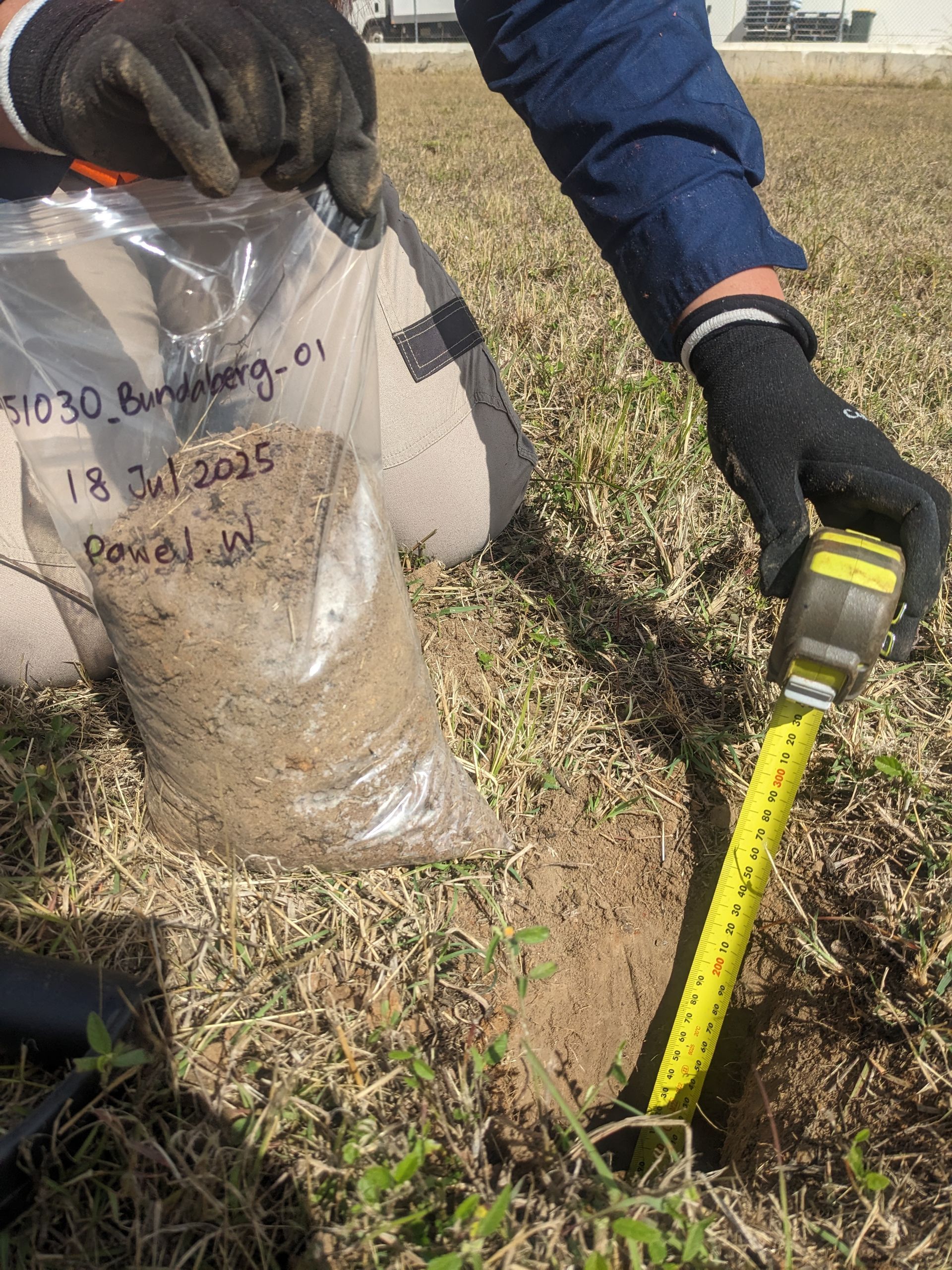
Redleaf Group recently completed a protected flora survey in the remote township of Eulo, a region known for its rugged landscapes and ecological significance. The site fell within a protected flora trigger area mapped under the Nature Conservation Act 1992, requiring a Suitably Qualified Person and adherence to strict survey guidelines. To meet these requirements, Redleaf deployed one of our ecologists, Dr Pawel Waryszak, from the Toowoomba office—travelling via a small aircraft (affectionately dubbed the “flying washing machine”) to reach the site located more than 700 km from the nearest major centre. Rigorous and Responsible Surveying Our assessment followed the Queensland Flora Survey Guidelines to ensure every flora species, including those of conservation concern, was accurately recorded. This work reflects Redleaf’s commitment to robust science, detailed documentation, and responsible environmental management, particularly in remote or sensitive landscapes. Supporting Your Environmental Needs Beyond flora surveys, our Environment Team supports councils, landholders, government agencies, and industry clients with a full suite of services including: Flora & fauna assessments Habitat mapping & biodiversity impact studies Environmental monitoring and rehabilitation planning Offset delivery advice and suitability assessments Waterway barrier surveys & aquatic ecology assessments Environmental modelling and compliance advice Whatever your environmental challenge, Redleaf’s multidisciplinary team provides solutions grounded in experience, precision, and practical outcomes.

At Redleaf Group, our heritage work is guided by a deep respect for Country and a commitment to meaningful connection with Traditional Owners. This year, we partnered with GHD and Brisbane City Council on a cultural heritage assessment at Nudgee Beach , working closely with the Turrbal People , the Traditional Owners of the area. Collaboration with Purpose Our Heritage Team walked Country with the Turrbal People, listening to their knowledge and cultural stories that shape the significance of this landscape. While no physical artefacts were found, the process reaffirmed the site’s cultural importance and the enduring relationship between people and place. Embedding Cultural Values in Project Delivery Redleaf provided practical recommendations to ensure the project continues respectfully, including: On-Country cultural heritage monitoring Cultural heritage inductions for project teams Opportunities for signage and interpretation of local cultural stories Walking Forward Together With this phase complete, the project progresses with a shared understanding of Country and its cultural values. Redleaf is proud to support work that brings people and Country together—and we remain committed to culturally grounded, collaborative heritage practice.

Did you know? Not all scarred trees are of Aboriginal cultural origin. Some, like the ones in these photos, were “blazed” by early European settlers, explorers, or surveyors to mark trails, boundaries, land parcels and even watercourses. These scars were often made using iron/steel axes, and the cut marks of these tools alongside visible traces of white paint are typical indicators of a European origin. They were used as surveyor’s marks before being replaced by the permanent survey markers that form the basis of today’s cadastral maps. You might be wondering: How do our expert archaeologists identify these blaze trees? These trees are identified by: Iron axe cut marks Remnants of white surveyor’s paint Placement on fence lines, lot corners, or boundary points Scarred trees, including these blazes, are all part of the multi-layered history written, or in this case - cut into our landscapes.

On 20 November 2025, the Queensland Government introduced the Environmental Protection (Efficiency and Streamlining) and Other Legislation Amendment Bill 2025, proposing significant reforms to the Environmental Protection Act 1994 (Qld). The Environmental Protection Act 1994 (EP Act) remains Queensland’s primary legislation regulating environmental management and environmentally relevant activities (ERAs). The proposed amendments are designed to improve efficiency and clarity within the approvals framework, while maintaining strong environmental protections. Rather than weakening environmental safeguards, the reforms aim to create a more risk-based, proportionate and streamlined regulatory system for proponents, developers and local government. What Is Changing Under the Environmental Protection Act 1994? The proposed EP Act amendments are intended to: modernise environmental approval and assessment processes streamline pathways for low-risk environmentally relevant activities clarify responsibilities, compliance expectations and regulatory triggers reduce duplicated assessment effort between agencies allow regulators to focus resources on higher-risk activities For project proponents, the framework remains robust but is expected to become clearer, faster and more predictable, particularly where environmental risk is low. Key Reform Themes Under the EP Act 1. Streamlined Approval Pathways for Low-Risk ERAs Under the amended EP Act, a greater range of standard and self-assessable codes is expected to apply to low-risk environmentally relevant activities. In appropriate circumstances, this may result in: reduced Environmental Authority (EA) application requirements shorter statutory assessment timeframes lower approval costs and administrative burden clearer environmental conditions at the outset Importantly, higher-risk activities will continue to require full assessment. The reforms focus on removing unnecessary process where environmental impacts are limited and well understood. 2. Clearer Environmental Obligations and Compliance Requirements A key objective of the reforms is to improve clarity and consistency across the EP Act by: refining key definitions aligning enforcement and compliance powers clarifying when an EA, code or exemption applies using more consistent language across legislative provisions These changes are intended to reduce approval uncertainty and delays by providing greater transparency around: which approvals are required what constitutes compliance or non-compliance regulator expectations during operation and rehabilitation 3. More Risk-Based Environmental Regulation The amendments place stronger emphasis on aligning regulatory effort with actual environmental risk. For industry, this is expected to deliver: less red tape for routine, low-impact activities greater scrutiny of large-scale or higher-risk proposals improved consistency in assessment outcomes clearer consequences where environmental harm occurs Overall, the reforms aim to create a more predictable and proportionate environmental approvals system. What the EP Act Reforms Mean for Proponents and Developers If your project triggers the Environmental Protection Act 1994, the proposed reforms may affect: whether a full Environmental Authority is required approval complexity, timeframes and costs the level of technical or specialist studies required operational and rehabilitation conditions ongoing compliance and enforcement obligations While approval pathways may become simpler for some activities, the reforms also reinforce the importance of: early identification of environmental risk appropriate technical assessment clear documentation and approvals strategy ongoing compliance once approvals are issued How Redleaf Group Can Help Navigate the Amended EP Act Redleaf Group supports clients through the full EP Act approvals lifecycle, helping projects move forward efficiently and with confidence. Our services include: EP Act approval pathway identification Determining whether self-assessable codes, standard conditions or a full Environmental Authority apply. Environmental Authority applications Preparing EA documentation and managing regulator engagement on your behalf. Environmental risk and compliance strategy Ensuring obligations are clearly understood and met throughout construction and operation. Technical environmental assessment Providing defensible ecological and environmental studies to support approvals where required. Our focus is on reducing approval uncertainty, minimising delays and maintaining compliance. What You Should Do Now Project proponents should: review planned or ongoing projects involving environmentally relevant activities confirm likely approval pathways under the amended EP Act reassess project timeframes to account for potential efficiencies seek early advice to avoid unnecessary redesign, delay or compliance risk

Government has introduced a Games-specific approvals framework that changes how cultural heritage is managed for certain Games-related projects. Recent amendments to the Brisbane Olympic and Paralympic Games Arrangements Act 2021 (BOPGA Act), introduced through the so-called “Games laws”, establish an alternative pathway for cultural heritage approvals for a limited class of Brisbane 2032 infrastructure. This article outlines what is changing, which projects are affected, and what this means for proponents, project teams and heritage practitioners. A new approvals regime for Brisbane 2032 venues and transport infrastructure The Planning (Social Impact and Community Benefit) and Other Legislation Amendment Act 2025 amends the BOPGA Act to create a tailored approvals framework for certain Brisbane 2032 venues, villages and transport infrastructure, referred to as “authority venues” and project areas. For these defined Games projects, cultural heritage is managed through a Games-specific process, rather than relying solely on the usual interaction between: the Planning Act 2016 the Queensland Heritage Act 1992 the Aboriginal Cultural Heritage Act 2003, and other relevant State and local laws Under the Games laws, approvals are centralised within Games delivery entities, including the Games Independent Infrastructure and Coordination Authority (GIICA), and aligned to the strict timeframes required for Games delivery. How the Games-specific cultural heritage process works A key feature of the Games laws is the introduction of a formal “cultural heritage notice”. Once a cultural heritage notice is given for a qualifying Brisbane 2032 project: the project transitions into the BOPGA Act approval pathway cultural heritage matters are assessed under the Games-specific regime decisions are made by designated Games authorities rather than through standard approval pathways This process is designed to streamline approvals for Games infrastructure, while still requiring heritage considerations to be addressed. What the Brisbane 2032 Games laws do – and do not – apply to It is critical to understand that this regime is narrowly targeted. The Games-specific cultural heritage framework applies only to projects that are: expressly identified as Brisbane 2032 authority venues, villages or Games transport infrastructure, and regulated under the BOPGA Act For these projects, compliance with the Games laws can, in certain circumstances, authorise works despite potential inconsistencies with other legislation, provided all Games-specific requirements are met. However, most projects in Queensland are not affected. For non-Games projects – including the majority of council works, private developments and regional infrastructure – existing heritage frameworks continue to apply in full, including: the Aboriginal Cultural Heritage Act 2003, including Duty of Care and Cultural Heritage Management Plan (CHMP) requirements the Queensland Heritage Act 1992 local planning-scheme heritage overlays and local heritage registers Practical implications for project teams and proponents For organisations involved in infrastructure delivery, the key questions are: Is the project a Brisbane 2032 authority venue, village or Games transport project? If not, standard cultural heritage obligations apply. If it is a Games project, which provisions of the BOPGA Act apply? This includes understanding the role of the cultural heritage notice, decision-makers, and project-specific timeframes. Early identification of the correct approvals regime is critical to avoiding delays, compliance risks and stakeholder issues. How Redleaf is supporting Brisbane 2032 cultural heritage compliance Redleaf is closely monitoring the evolution of the Brisbane 2032 Games laws and approvals framework. Where clients become involved in Games-related infrastructure, we can: determine whether the Games-specific or standard heritage regime applies design heritage methodologies that meet BOPGA Act requirements support robust engagement with Traditional Owners and key stakeholders, even within accelerated delivery timeframes If you would like advice on how the Brisbane 2032 Games laws affect your project, please contact our team.

Recent reforms to the Environment Protection and Biodiversity Conservation Act 1999 (EPBC Act) have strengthened expectations around early engagement with Traditional Owners for projects that require federal environmental approval. For organisations planning major infrastructure or development, this affects how heritage, culture and environment are considered right from the outset. What has changed at the federal level? The reforms introduce new National Environmental Standards (NES) and associated guidance that make clear Traditional Owners should be engaged early, not just once an EIS or assessment is already in full swing. For proposals affecting World Heritage and National/Commonwealth Heritage places, Ramsar wetlands or other Matters of National Environmental Significance, proponents are expected to show how Traditional Owner knowledge has informed project design, impact assessment and mitigation measures. The updated federal “Engage Early” guidance reinforces that Traditional Owners and relevant Aboriginal parties are the primary source of information about Indigenous cultural values, and that their involvement should be planned into project timelines and budgets rather than treated as a late compliance step. What hasn’t changed for day‑to‑day Queensland work? These EPBC changes do not alter Queensland’s own heritage legislation. The Aboriginal Cultural Heritage Act 2003, the Queensland Heritage Act 1992 and local planning‑scheme heritage overlays continue to operate as before, with the usual Duty of Care and CHMP processes still in place. For purely State or local projects with no federal referral, existing obligations and workflows remain the primary reference point. What this means in practice For projects that have a realistic chance of triggering the EPBC Act, there are practical implications: Scoping: Potential EPBC issues (e.g. World Heritage, National Heritage, Ramsar) should be identified early, and Traditional Owner engagement built into the project scope from the beginning. Engagement planning: Engagement with Traditional Owners should occur before referral or early in the assessment process, with clear records of meetings, input and how concerns have shaped survey design and mitigation. Reporting: Heritage and environmental reports for EPBC‑relevant projects should explicitly reference the new expectations for early engagement and demonstrate how Traditional Owner perspectives are integrated into final recommendations. For clients, building this engagement in upfront can reduce risk and delay in federal approvals while supporting better cultural and environmental outcomes.